
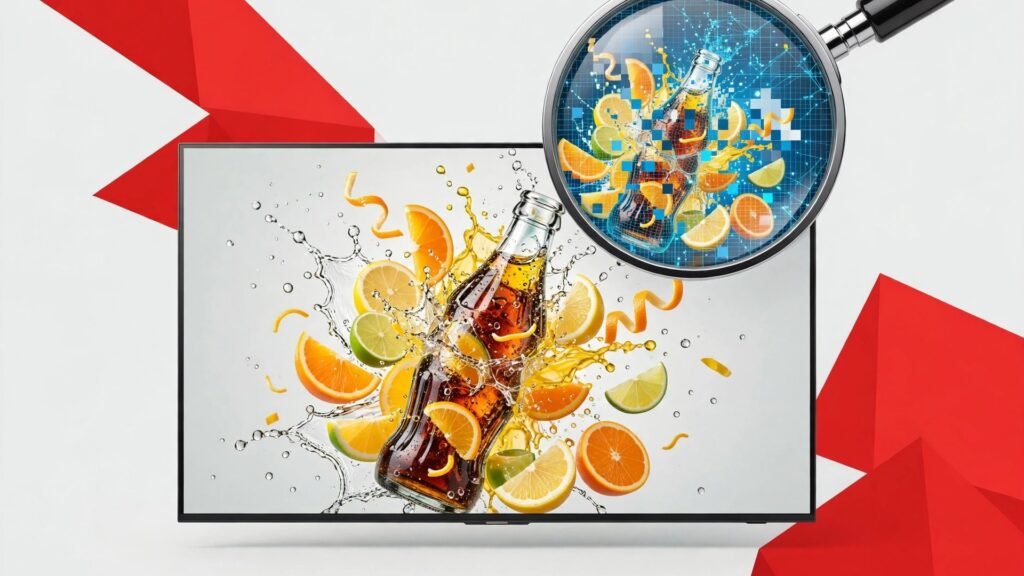
Last year, a thirty-second ad aired during the biggest television night in America, and the internet lost its mind over a single question: was that commercial made with AI?
Dunkin’s Super Bowl LX spot, “Good Will Dunkin’,” featured beloved Boston faces digitally de-aged decades into their younger selves. The effect was so seamless that millions of viewers assumed generative AI had done the whole thing. Search queries for “was the dunkin commercial ai” broke out within days. Viewers weren’t debating the acting, the script, or the brand. They were debating the tool.
That is the new reality of AI commercials on TV. The question used to be “did you see that ad?” Now it is “was that AI?” And behind that question sits a sharper one that nobody asks out loud: does it matter?
Why Everyone Is Suddenly Asking
Dunkin’ was not the first brand to trigger the question, and it will not be the last. Xfinity aired a spot channeling Jurassic Park, and search spikes followed asking whether it was AI-generated. Svedka’s animated campaign had viewers arguing in comment sections about whether a machine drew it. Spencer Pratt’s name got attached to an AI commercial query that spiked over four thousand percent. The pattern repeats: an ad airs, something about it looks almost too polished, too strange, or too smooth, and the detective work begins.
Here is the part most brands miss. The Dunkin’ spot, the one that started the biggest wave, was not generative AI at all. It was digital de-aging, a craft technique visual effects artists have refined for years, frame by frame. Viewers assumed AI because the result looked impossible to the naked eye, and AI has become the default explanation for anything that looks impossible.
That confusion is the whole story. The audience can no longer tell craft from computation, and in that gap, a strange new currency has formed. Being accused of using AI has become a backhanded compliment. It means the work looked ambitious enough to feel unreal.
How AI Commercials on TV Are Actually Made
The internet imagines a brand manager typing “make me a commercial” into a prompt box and downloading a finished spot. The actual pipeline inside studios is nothing like that, and the gap between the fantasy and the craft is where the good work lives.
A well-made AI commercial starts the same way any commercial starts: with an idea. The concept, the joke, the emotional beat, the casting of silhouettes and settings, all of that is decided before any model is touched. Then comes direction, art direction, lighting design in virtual environments, camera language, and edit rhythm. The generative tools handle execution within a locked creative frame, and everything they produce gets curated, corrected, and composited by humans.
The difference between an AI spot that embarrasses a brand and one that elevates it is not the tool. It is the taste operating the tool. A prompt alone produces the floating-plastic look that gives AI commercials their bad name: glossy skin, impossible lighting, physics that wobble if you stare. A studio treats the model as one instrument in an orchestra, not the orchestra itself. The edit, the sound design, the colour grade, and the motion graphics are still human decisions, and audiences can feel the difference even when they cannot name it.
This is why the “was it AI?” question is the wrong test. The right question is whether the spot was made by people with standards.
The Five-Second Forensics Test
Since everyone is asking, here is the honest answer to how you actually tell. Studios use a version of this instinctively. Call it the Five-Second Forensics Test, five tells that surface in the first five seconds of looking.
1. The hands and the teeth. Generative models have improved, but extremities still betray them. Fingers merge, teeth shimmer, and anything the camera lingers on too long starts to wobble. If a spot avoids close-ups of hands entirely, that is a choice worth noticing.
2. The physics of small things. Watch how liquid pours, how fabric moves, how hair reacts to wind. Real physics has chaos in it. Generated physics is too smooth, too eager to please. The world in a prompt-made spot moves like a dream moves, close to real but frictionless.
3. Text in the frame. Generated text on packaging, signage, and interfaces still drifts into convincing gibberish at a glance. A spot that keeps product labels slightly out of focus may be hiding a known weakness.
4. The background drift. Pause on any frame and look at the edges. Backgrounds in generated footage subtly rearrange themselves shot to shot. A storefront sign that says three different things across three cuts is a giveaway.
5. The emotional flatline. This is the big one. A fully generated spot can look immaculate and feel like nothing. Craft is not just pixels. It is timing, casting, the half-second beat before the joke lands. Machines do not have comic timing. When an ad looks perfect and lands flat, you are usually looking at a prompt without a director.
Run these five and you will answer the question correctly most of the time. But notice what the test really measures: the presence or absence of human craft.
Why Some AI Spots Spark Backlash and Others Get Shared
Not all AI commercials are received the same way, and the dividing line has nothing to do with how much AI was used. It has everything to do with whether the brand respects the audience.
The backlash spots share a pattern. They use AI to replace the visible human labour the audience expected: the actor, the animator, the hands that made something. Viewers feel tricked, not impressed, because the brand tried to pass machine output off as human effort. The outrage is not really about technology. It is about being taken for a fool.
The celebrated spots do the opposite. They use AI to attempt something that was previously impossible or unaffordable: a de-aged reunion, a surreal world, a product film that puts a bottle through a sequence no camera could survive. The audience knows it is constructed and loves it anyway, because the construction is the point. The idea came first. The tool served the idea.
This is the trust rule of AI advertising, and it is simple enough to pin on a wall: AI is celebrated when it makes the idea bigger, and resented when it makes the craft smaller. Every brand choosing to use AI in a commercial is choosing, knowingly or not, which side of that line to stand on.
What This Means If You Are Buying a Commercial
If you are a brand about to commission a spot, the “was it AI?” era actually simplifies your decision, not complicates it. Here is how to think about it.
First, ask any studio how AI enters their process, and be suspicious of two answers. Be suspicious of “we don’t use it,” which usually means they do and will not say so. Be equally suspicious of “everything is AI,” which usually means one person and a subscription. What you want to hear is a specific, boring answer: which tools, at which stage, reviewed by whom, with what quality bar. Craft people answer this question in detail. Prompt-jockeys answer it in slogans.
Second, judge the portfolio the way the forensics test judges a spot. Not by how shiny it looks, but by whether it feels like something. A studio’s best argument is work you remember the next day. No tool invents a memorable idea. The commercials worth paying for are the ones with a concept strong enough to survive any production method.
Third, remember the Dunkin’ lesson. The spot that started the biggest AI debate of the year was not AI at all. It was human craft at a level the audience could not believe. That is the bar now. When craft is good enough, nobody cares what made it. They only care that it made them feel something.
Talk to Us
The tools will keep getting better. The detectors will keep getting sharper. The question “was that commercial made with AI?” is not going away, and honestly, it is the wrong question to fear. The right question is the one we ask before every project: what is the idea, and what does it need to become?
If you have an idea that needs commercials, motion and VFX craft, or a product film that looks impossible, talk to us. We will tell you exactly where AI helps and exactly where it does not. The audience can spot the difference. So can we.